
Smooth Low Bun
A smooth surface. The shape rests low at the nape.
A smooth bun, soft waves or your own curls. Find the shape you love, then bring the veil and accessories into the picture.

WikiMarket / Beauty
A closer look
Start with what catches your eye. Look at the shape, notice the details, then compare two ideas.
A smooth surface. The shape rests low at the nape.

Loose length with a repeating wave pattern.

The upper section is secured; curls keep the length visible.

A raised silhouette with clearly visible curls.
Visual references illustrate the styles; they are not a stylist’s verified portfolio.
Read the guideUnderstand the hairstyle
Start with the outline you want to see.
A wedding hairstyle is an arrangement of the hair for a ceremony and the events around it. It combines a shape, surface texture, placement around the face and a way of securing the result. A veil, ornament or extra hair may be part of the brief; none is compulsory.
Start with the result you want to see and feel: the hair gathered or loose, the neck open or covered, a smooth surface or visible curls. Then check that result on your hair, with your accessories and the actual plan for the day. A style name alone is not a specification or a guarantee of wear.
The ten browsing collections organise 100 hairstyle examples. The six basic form families introduce 30 types in total. These compare different features: form, hair length and the existing structure of the hair. A locs or curly style may be gathered or half-up where the length and construction allow. They do not represent 180 different types.
Shape, texture, volume and holdHow to compare suitable styles
Shape is the outline and placement of the hair. Texture describes its visible surface: smooth sections, waves, curls, braids or twists. Volume is how far the silhouette projects; it is different from hair density, which describes how much hair grows in an area. Finish describes the final surface impression, such as gloss or a softer, less polished look.
Gathered shape or flowing length?


Pins, ties, combs, supporting pieces and styling products do different jobs. Ask which parts support the shape, which secure an accessory and which are decorative. More product or tighter pulling does not automatically make a better hairstyle. If the hair pulls painfully, ask for the tension to be changed.
Length and starting hair propertiesWith a veil and accessories
Forms and families
Main collection
The top row shows ideas for your visual preferences; the complete catalogue below contains all 100 styles in 10 groups.
No looks found. Try a shorter name or clear the filters.
All 100 cards are below, with photos, short tips and links to the style descriptions.
Browse the cards to compare the shape and effect. You can then explore the labelled demo profiles or prepare an enquiry.
Use the arrow keys to browse; Home and End go to the beginning and end.
Top 100 covers more groups than the basic guide's 6 shape families: additional groups include short hair, locs, protective styles and natural curls.
#1Buns / Polished and timeless
Smooth Low Bun: a smooth or textured bridal style with a clean neckline and a comfortable balance for a veil.
#2Buns / Polished and timeless
Classic Low Bun: a smooth or textured bridal style with a clean neckline and a comfortable balance for a veil.
 #3
Buns / Polished and timeless
Sleek Low Bun: a smooth or textured bridal style with a clean neckline and a comfortable balance for a veil.
 #4
Buns / Polished and timeless
Center Part Low Bun: a smooth or textured bridal style with a clean neckline and a comfortable balance for a veil.
 #5
Buns / Polished and timeless
Romantic Low Bun: a smooth or textured bridal style with a clean neckline and a comfortable balance for a veil.
 #6
Buns / Polished and timeless
Pearl Low Bun: a smooth or textured bridal style with a clean neckline and a comfortable balance for a veil.
 #7
Buns / Polished and timeless
Twisted Low Bun: a smooth or textured bridal style with a clean neckline and a comfortable balance for a veil.
 #8
Buns / Polished and timeless
Braided Low Bun: a smooth or textured bridal style with a clean neckline and a comfortable balance for a veil.
 #9
Buns / Polished and timeless
Chignon Low Bun: a smooth or textured bridal style with a clean neckline and a comfortable balance for a veil.
 #10
Buns / Polished and timeless
Soft Volume Low Bun: a smooth or textured bridal style with a clean neckline and a comfortable balance for a veil.
 #11
Buns / Polished and timeless
Elegant High Bun: a smooth or textured bridal style with a clean neckline and a comfortable balance for a veil.
 #12
Buns / Polished and timeless
Modern High Bun: a smooth or textured bridal style with a clean neckline and a comfortable balance for a veil.
 #13
Buns / Polished and timeless
Ballerina Bun: a smooth or textured bridal style with a clean neckline and a comfortable balance for a veil.
 #14
Buns / Polished and timeless
Textured High Bun: a smooth or textured bridal style with a clean neckline and a comfortable balance for a veil.
 #15
Buns / Polished and timeless
Veil Ready High Bun: a smooth or textured bridal style with a clean neckline and a comfortable balance for a veil.
 #16
Buns / Polished and timeless
Curly High Bun: a smooth or textured bridal style with a clean neckline and a comfortable balance for a veil.
 #17
Buns / Polished and timeless
Braided High Bun: a smooth or textured bridal style with a clean neckline and a comfortable balance for a veil.
 #18
Buns / Polished and timeless
Sculpted High Bun: a smooth or textured bridal style with a clean neckline and a comfortable balance for a veil.
 #19
Buns / Polished and timeless
Messy High Bun: a smooth or textured bridal style with a clean neckline and a comfortable balance for a veil.
 #20
Buns / Polished and timeless
Knotted High Bun: a smooth or textured bridal style with a clean neckline and a comfortable balance for a veil.
 #21
Updos / Editorial with volume
Textured Updo: a bridal updo with texture and height, designed for a long celebration.
 #22
Updos / Editorial with volume
Soft Updo: a bridal updo with texture and height, designed for a long celebration.
 #23
Updos / Editorial with volume
Romantic Updo: a bridal updo with texture and height, designed for a long celebration.
 #24
Updos / Editorial with volume
Floral Updo: a bridal updo with texture and height, designed for a long celebration.
 #25
Updos / Editorial with volume
Loose Updo: a bridal updo with texture and height, designed for a long celebration.
 #26
Updos / Editorial with volume
French Twist Updo: a bridal updo with texture and height, designed for a long celebration.
 #27
Updos / Editorial with volume
Modern Twist Updo: a bridal updo with texture and height, designed for a long celebration.
 #28
Updos / Editorial with volume
Crown Updo: a bridal updo with texture and height, designed for a long celebration.
 #29
Updos / Editorial with volume
Vintage Updo: a bridal updo with texture and height, designed for a long celebration.
 #30
Updos / Editorial with volume
Airy Updo: a bridal updo with texture and height, designed for a long celebration.
#31Waves / Soft glamour
Hollywood Waves: a loose bridal style with shine, softness and visible movement in photos.
 #32
Waves / Soft glamour
Boho Beach Waves: a loose bridal style with shine, softness and visible movement in photos.
 #33
Waves / Soft glamour
Glossy Soft Waves: a loose bridal style with shine, softness and visible movement in photos.
 #34
Waves / Soft glamour
Side Swept Waves: a loose bridal style with shine, softness and visible movement in photos.
 #35
Waves / Soft glamour
Old Hollywood Waves: a loose bridal style with shine, softness and visible movement in photos.
 #36
Waves / Soft glamour
Mermaid Waves: a loose bridal style with shine, softness and visible movement in photos.
 #37
Waves / Soft glamour
Brushed Out Waves: a loose bridal style with shine, softness and visible movement in photos.
 #38
Waves / Soft glamour
Vintage Waves: a loose bridal style with shine, softness and visible movement in photos.
 #39
Waves / Soft glamour
Loose Glam Waves: a loose bridal style with shine, softness and visible movement in photos.
 #40
Waves / Soft glamour
Waterfall Waves: a loose bridal style with shine, softness and visible movement in photos.
#41Half-up styles / Balanced and romantic
Half-Up Half-Down Curls: a balanced style that opens up the face while keeping the length visible.
 #42
Half-up styles / Balanced and romantic
Half-Up Soft Waves: a balanced style that opens up the face while keeping the length visible.
 #43
Half-up styles / Balanced and romantic
Half-Up Braid Crown: a balanced style that opens up the face while keeping the length visible.
 #44
Half-up styles / Balanced and romantic
Half Up Twists: a balanced style that opens up the face while keeping the length visible.
 #45
Half-up styles / Balanced and romantic
Half Up Pearl Pins: a balanced style that opens up the face while keeping the length visible.
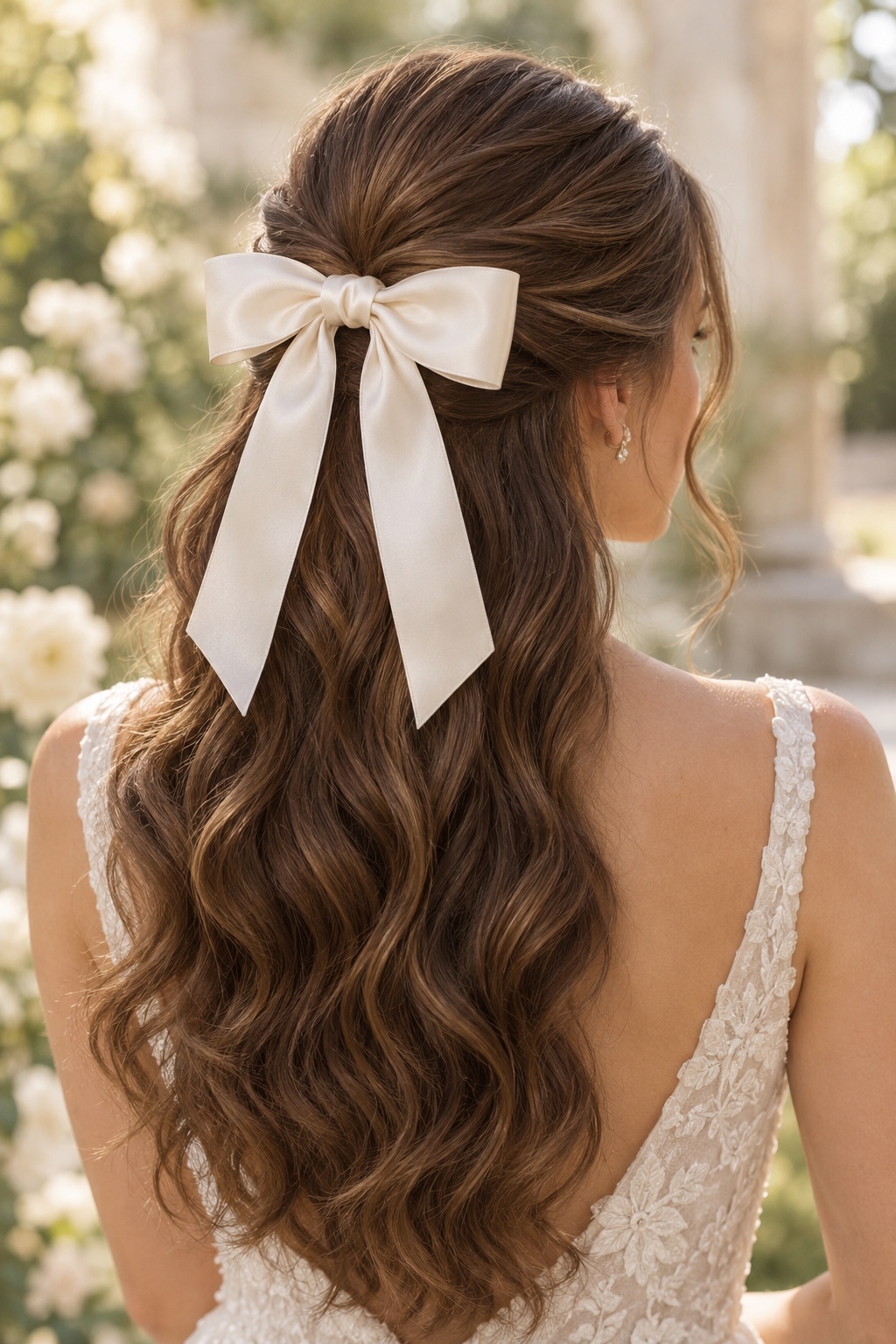 #46
Half-up styles / Balanced and romantic
Half Up Bow Detail: a balanced style that opens up the face while keeping the length visible.
 #47
Half-up styles / Balanced and romantic
Half Up Ponytail: a balanced style that opens up the face while keeping the length visible.
 #48
Half-up styles / Balanced and romantic
Half-Up Floral Detail: a balanced style that opens up the face while keeping the length visible.
 #49
Half-up styles / Balanced and romantic
Half-Up Volume Curls: a balanced style that opens up the face while keeping the length visible.
#50Half-up styles / Balanced and romantic
Half Up Veil Ready: a balanced style that opens up the face while keeping the length visible.
 #89
Half-up hairstyles
Half-Up Waves with a Braid: An upper or side section is secured while some of the length remains loose.
 #51
Braids / Textured and expressive
Boho Braid: a detailed braided bridal look with a clearly visible pattern in photos.
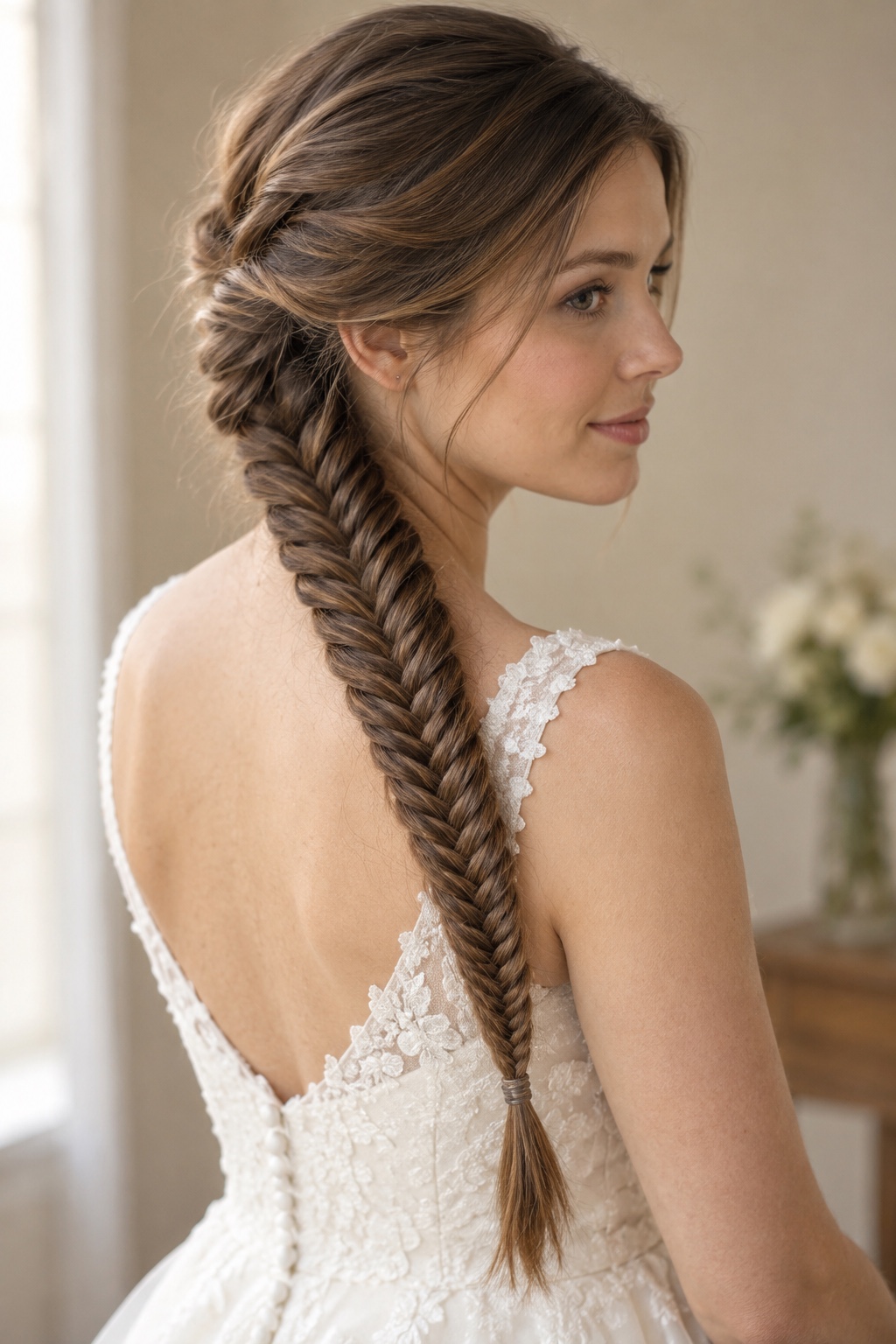 #52
Braids / Textured and expressive
Fishtail Braid: a detailed braided bridal look with a clearly visible pattern in photos.
 #53
Braids / Textured and expressive
Crown Braid: a detailed braided bridal look with a clearly visible pattern in photos.
 #54
Braids / Textured and expressive
Dutch Braid: a detailed braided bridal look with a clearly visible pattern in photos.
 #55
Braids / Textured and expressive
Halo Braid: a detailed braided bridal look with a clearly visible pattern in photos.
 #56
Braids / Textured and expressive
Waterfall Braid: a detailed braided bridal look with a clearly visible pattern in photos.
 #57
Braids / Textured and expressive
Side Braid: a detailed braided bridal look with a clearly visible pattern in photos.
 #58
Braids / Textured and expressive
Braided Ponytail: a detailed braided bridal look with a clearly visible pattern in photos.
 #59
Braids / Textured and expressive
Rope Braid: a detailed braided bridal look with a clearly visible pattern in photos.
 #60
Braids / Textured and expressive
Pull Through Braid: a detailed braided bridal look with a clearly visible pattern in photos.
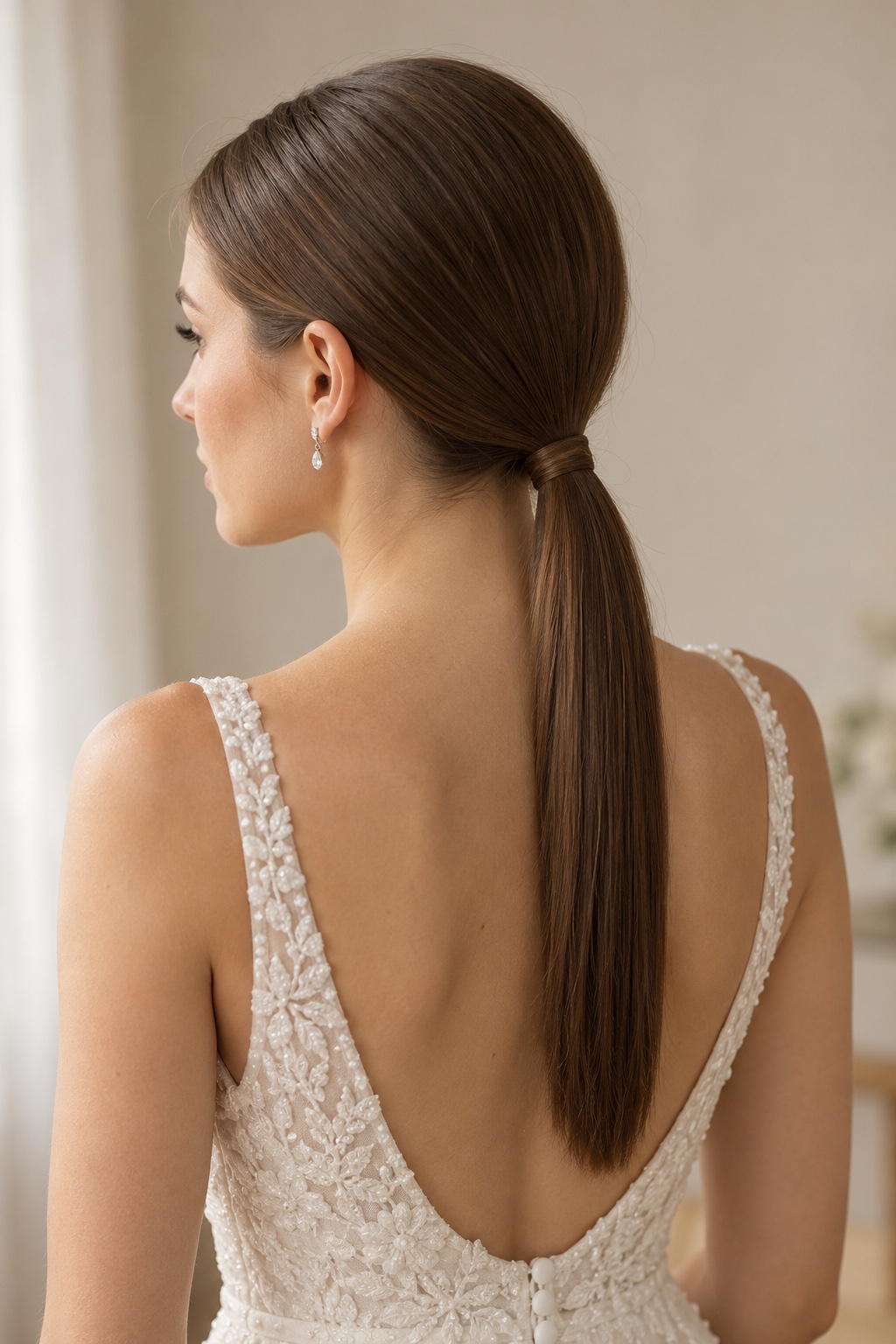 #61
Ponytails / Modern and defined
Sleek Low Ponytail: a sleek or textured bridal style with a modern, photogenic profile.
 #62
Ponytails / Modern and defined
Soft Curled Ponytail: a sleek or textured bridal style with a modern, photogenic profile.
 #63
Ponytails / Modern and defined
Bubble Ponytail: a sleek or textured bridal style with a modern, photogenic profile.
 #64
Ponytails / Modern and defined
Wrapped Ponytail: a sleek or textured bridal style with a modern, photogenic profile.
 #65
Ponytails / Modern and defined
Glam High Ponytail: a sleek or textured bridal style with a modern, photogenic profile.
 #66
Ponytails / Modern and defined
Romantic Ponytail: a sleek or textured bridal style with a modern, photogenic profile.
 #67
Ponytails / Modern and defined
Side Part Ponytail: a sleek or textured bridal style with a modern, photogenic profile.
#68Ponytails / Modern and defined
Textured Low Ponytail: a sleek or textured bridal style with a modern, photogenic profile.
 #69
Ponytails / Modern and defined
Braided High Ponytail: a sleek or textured bridal style with a modern, photogenic profile.
 #70
Ponytails / Modern and defined
Ribbon Detail Ponytail: a sleek or textured bridal style with a modern, photogenic profile.
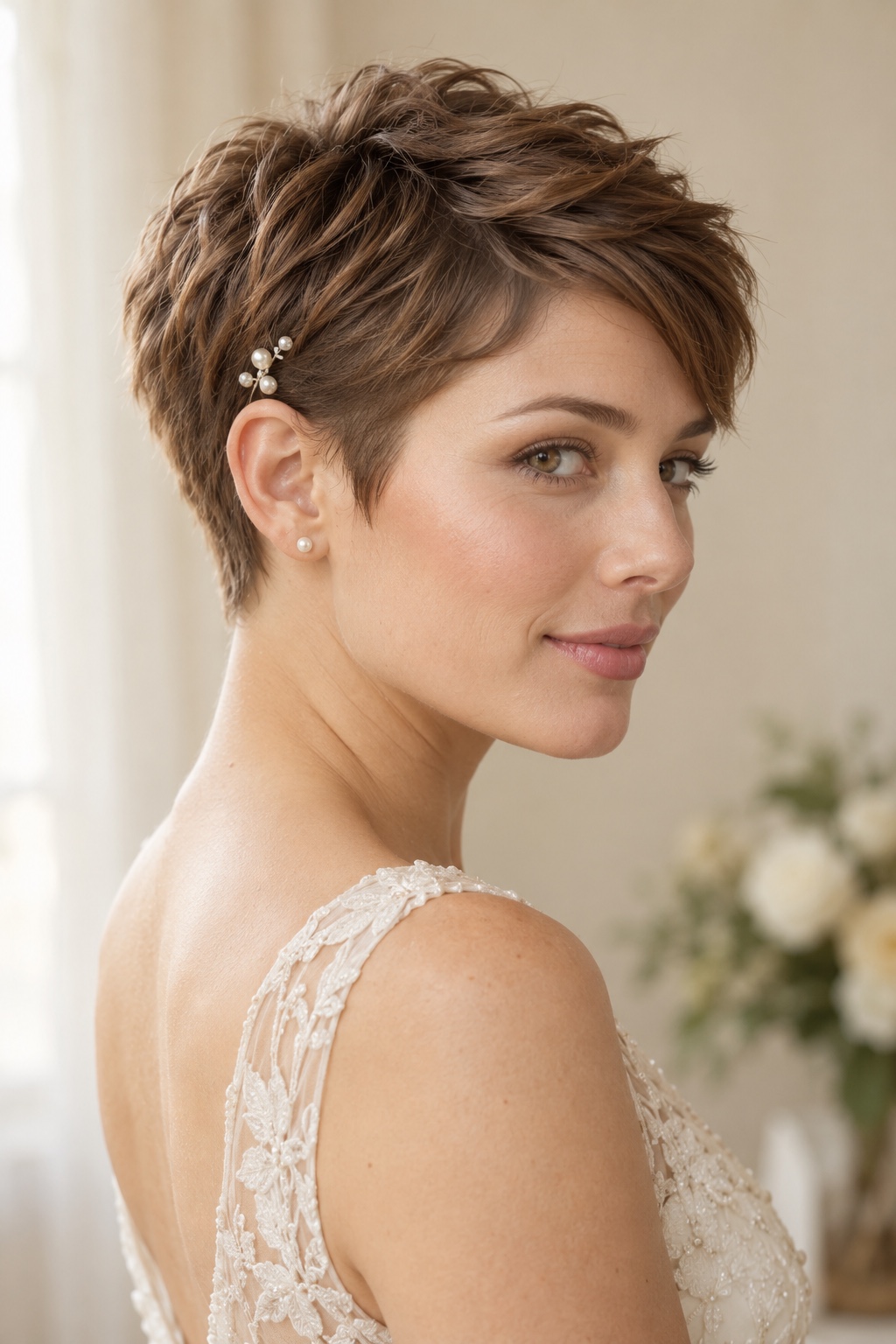 #71
Short haircuts / Precise and refined
Pixie Texture: a short bridal silhouette shaped around the finish, form and accessory placement.
 #72
Short haircuts / Precise and refined
Short Wave Bob: a short bridal silhouette shaped around the finish, form and accessory placement.
 #73
Short haircuts / Precise and refined
Sleek Bridal Bob: a short bridal silhouette shaped around the finish, form and accessory placement.
 #74
Short haircuts / Precise and refined
Side-Part Short Curls: a short bridal silhouette shaped around the finish, form and accessory placement.
 #75
Short haircuts / Precise and refined
Finger Waves Bob: a short bridal silhouette shaped around the finish, form and accessory placement.
 #76
Short haircuts / Precise and refined
Tucked Back Short Style: a short bridal silhouette shaped around the finish, form and accessory placement.
 #77
Short haircuts / Precise and refined
Pearl Pin Bob: a short bridal silhouette shaped around the finish, form and accessory placement.
 #78
Short haircuts / Precise and refined
Soft Volume Lob: a short bridal silhouette shaped around the finish, form and accessory placement.
 #79
Short haircuts / Precise and refined
Side Swept Bob: a short bridal silhouette shaped around the finish, form and accessory placement.
 #80
Short haircuts / Precise and refined
Vintage Short Glam: a short bridal silhouette shaped around the finish, form and accessory placement.
 #81
Locs / Natural and lifted
Half-Up Locs with Crown Volume: a bridal look for locs that respects their structure, balances decoration and keeps the silhouette defined.
 #82
Locs / Natural and lifted
Locs Bun: a bridal look for locs that respects their structure, balances decoration and keeps the silhouette defined.
 #83
Locs / Natural and lifted
Locs Crown: a bridal look for locs that respects their structure, balances decoration and keeps the silhouette defined.
 #84
Locs / Natural and lifted
Locs Ponytail: a bridal look for locs that respects their structure, balances decoration and keeps the silhouette defined.
 #85
Locs / Natural and lifted
Braided Locs Updo: a bridal look for locs that respects their structure, balances decoration and keeps the silhouette defined.
 #86
Locs / Natural and lifted
Floral Locs Style: a bridal look for locs that respects their structure, balances decoration and keeps the silhouette defined.
 #87
Locs / Natural and lifted
Twisted Locs Bun: a bridal look for locs that respects their structure, balances decoration and keeps the silhouette defined.
 #88
Locs / Natural and lifted
Soft Curls on Locs: a bridal look for locs that respects their structure, balances decoration and keeps the silhouette defined.
#90Locs / Natural and lifted
Locs Side Swept: a bridal look for locs that respects their structure, balances decoration and keeps the silhouette defined.
 #91
Protective styles / Structured and striking
Fulani Braids: a bridal protective style with neat partings, ready for accessories.
 #92
Protective styles / Structured and striking
Goddess Braids: a bridal protective style with neat partings, ready for accessories.
 #93
Protective styles / Structured and striking
Knotless Braids Bun: a bridal protective style with neat partings, ready for accessories.
 #94
Protective styles / Structured and striking
Cornrow Low Bun: a bridal protective style with neat partings, ready for accessories.
 #95
Protective styles / Structured and striking
Twist Crown: a bridal protective style with neat partings, ready for accessories.
 #96
Protective styles / Structured and striking
Passion Twists Updo: a bridal protective style with neat partings, ready for accessories.
 #97
Protective styles / Structured and striking
Marley Twists Bun: a bridal protective style with neat partings, ready for accessories.
#98Natural curls / Soft volume and texture
Natural Curly Puff: a bridal style for natural curls, with a focus on definition, softness and layered volume.
 #99
Natural curls / Soft volume and texture
Defined Coils Updo: a bridal style for natural curls, with a focus on definition, softness and layered volume.
 #100
Natural curls / Soft volume and texture
Afro-Textured Side Part: a bridal style for natural curls, with a focus on definition, softness and layered volume.
Use this guide to compare shapes: choose a family, compare its 5 basic types, then consider the veil, style and hair length. The photo catalogue shows examples to explore.
Crossing strands form the visible pattern.
Explore the group and its 5 typesFind your style within the group
This compact map of basic shapes helps you decide which structure to discuss with your stylist without repeating all of Top 100.
Buns
The lengths are gathered into a compact shape. Placement may be low, high or to one side; the surface can be smooth, textured or braided. Check its position against the neckline and the veil attachment at the trial.
A low position and a smooth finish describe different attributes. A chignon is commonly a gathered or rolled arrangement at the back; here it is a named variation, not a promise of one fixed technique.
Length and starting hair propertiesWith a veil and accessoriesThe hairstyle trial
A common reason to choose it: For a neat bridal bun suited to the ceremony, photos, a veil and a long wedding-day schedule.
A versatile bridal bun for a classic ceremony, a balanced profile and comfortable veil attachment.
Details to consider:
A sleek low bun for a minimalist dress, a clean nape line and an editorial finish.
Details to consider:
A soft, textured bun for a romantic look with understated luxury and no feeling of heaviness.
Details to consider:
A high placement reveals the neck and earrings and helps the style hold through a busy day.
Details to consider:
Combines the texture of braiding with the stability of a bun for added detail in a secure updo.
Details to consider:
Updos
Most of the length is lifted, folded, rolled or pinned into an arranged shape rather than left hanging freely.
A bun is one kind of updo. This catalogue keeps a separate updo family for rolls, twists and more distributed arrangements; the groups overlap rather than exclude one another.
Length and starting hair propertiesWith a veil and accessoriesThe hairstyle trial
A common reason to choose it: For a structured updo suited to an early start and a long day, carefully balanced with your dress and accessories.
A traditional bridal style with a balanced silhouette, a structured shape and a timeless feel.
Details to consider:
A soft updo with gentle volume around the face for a light, romantic bridal look.
Details to consider:
A style with visible texture and crown volume for a statement without a heavy glossy finish.
Details to consider:
A twisted updo with clean detail and an intricate yet tidy pattern.
Details to consider:
A looser updo with a soft outline around the face, balancing hold and movement.
Details to consider:
Half-up styles
An upper or side section is secured while some of the length remains loose. The loose part may be straight, wavy, curly, braided or made from locs.
The secured section and the loose length have separate roles. A half-up arrangement retains movement and length while changing the framing around the face.
Length and starting hair propertiesWith a veil and accessoriesThe hairstyle trial
A common reason to choose it: For soft length down the back, veil compatibility and a romantic silhouette without putting all the hair up.
A basic half-up style with a soft bridal silhouette and a controlled line around the face.
Details to consider:
A half-up base with soft curls for a romantic effect and visible length in photos.
Details to consider:
Adds textured braiding to the top section while keeping the length and softness down the back.
Details to consider:
Suited to a more defined crown line and visual balance with a veil or tiara.
Details to consider:
Designed around a planned veil attachment point, keeping the length visible and comfortable.
Details to consider:
Waves and curls
A wave is a curved pattern along a section; a curl turns around itself more distinctly. The look may use your natural pattern or a temporary set. Look for movement, shine and visible length without a rigid outline.
Hollywood waves usually aim for an aligned, continuous wave pattern. Loose or beach-inspired waves use a less uniform arrangement. These are visual briefs, with no universal curl size or durability attached to the name.
Length and starting hair propertiesWith a veil and accessoriesThe hairstyle trial
A common reason to choose it: When softness, photogenic length and a relaxed or expressive bridal mood are your priorities.
Smooth, glossy waves for an evening bridal look, with a defined line around the face and photogenic shine.
Details to consider:
Soft curls add gentle volume and romance to medium-length or even shorter hair.
Details to consider:
A looser option with a boho feel, natural movement and an understated, relaxed silhouette.
Details to consider:
Casual textured waves for an outdoor wedding, boho decoration and a more relaxed look.
Details to consider:
Sweeps the length to one side, complementing a bare shoulder and statement jewellery.
Details to consider:
Ponytails
Hair is brought to a fastening point and the remaining length hangs from it. Position, surface and treatment of the hanging length can change independently. Consider the open neck and how the style will be refreshed.
A high or low tail describes position; sleek, wavy or braided describes the finish or construction. A wrapped strand can cover the fastening but is not the same as a supporting tie.
Length and starting hair propertiesWith a veil and accessoriesThe hairstyle trial
A common reason to choose it: For a modern ponytail with clean lines, visible length and a fresh editorial feel.
A low ponytail for a simple silhouette, a neat view of the dress back and a controlled finish without stiffness.
Details to consider:
A sleek ponytail for a minimalist bride, a defined face outline and a modern look with little decoration.
Details to consider:
A high ponytail creates a lifted effect, opens up the face and helps the look stay fresh into the evening.
Details to consider:
Combines a controlled base with soft lengths for a ponytail without a severe feel.
Details to consider:
Adds height at the crown when the dress calls for a more structured upper silhouette.
Details to consider:
Braids
Sections of hair cross to create a woven pattern. A braid may be the main form, a band around the head or a detail within a bun or half-up style. Texture, boho movement and visible hand-worked detail can shape the look without excessive decoration.
A fishtail uses small sections crossing between two larger groups. A crown describes the placement around the head. A waterfall lets some strands drop from the braid. Ask for the visible pattern, not just the name.
Length and starting hair propertiesWith a veil and accessoriesThe hairstyle trial
A common reason to choose it: For a braided style at an outdoor wedding, with texture, accessories and soft movement in photos.
A basic structured braid for neat hold and controlled hair direction.
Details to consider:
Creates more visible texture and looks rich on long hair in natural light.
Details to consider:
A braid around the head for a defined upper line and a more structured balance of boho and classic styling.
Details to consider:
Moves volume to one side and pairs well with a bare shoulder or an asymmetric dress.
Details to consider:
Keeps the length visible and adds a decorative braid line for a soft, romantic look.
Details to consider:
Short hair can be styled through parting, direction, surface texture and accessories without imitating a long-haired updo.
Pixie and bob describe haircuts, not a single wedding finish. A wave, slicked direction or ornament can change the look while retaining the haircut.
Length and starting hair propertiesWith a veil and accessoriesThe hairstyle trial
Locs are formed strands with their own structure. They can be arranged in a bun, ponytail, half-up shape or loose silhouette without treating them as loose individual hairs.
This is a starting-hair branch as well as a style family: the same bun or half-up idea can use locs. Their length, thickness and existing arrangement matter to the brief.
Length and starting hair propertiesWith a veil and accessoriesThe hairstyle trial
This catalogue groups existing braids and twists that are arranged into a wedding shape. “Protective” is a customary category name, not a guarantee that a tight or heavy style is harmless.
Cornrows are braids worked close along the scalp; twists use strands wound together. Knotless and other named braiding methods concern construction, while bun or crown describes the final placement. Confirm the exact method with the stylist.
Length and starting hair propertiesWith a veil and accessoriesThe hairstyle trial
The natural curl or coil pattern remains part of the result. It can be worn loose, gathered, to one side or in a half-up arrangement.
Define the desired outline and how much separation or grouping of curls you prefer. A similar photograph may have a different natural pattern, density or starting length. Agree your usual hydration routine and the desired curl definition in advance.
Length and starting hair propertiesWith a veil and accessoriesThe hairstyle trial
Your starting hair
Length is the distance available for the chosen arrangement. Density is the amount of hair in an area; strand thickness is the size of an individual hair. Natural straightness, wave, curl or coil is another property. Fine strands are not necessarily sparse hair, and long hair does not automatically produce a large bun.
Short hair still has a distinct silhouette.
Share recent front, side and back photographs, your usual parting and fringe, existing extensions or locs, and changes since the trial. Compare references for their shape and texture rather than treating a photograph as a promised replica. The stylist can explain which parts can be achieved with your present hair and which would require a different method or added material.
Additional hair may provide length or fullness; padding may support a shape without adding loose length. They solve different problems and are optional. First ask what the proposed addition changes and whether a smaller or different shape would meet the brief without it.
What to agreeAgree the attachment method, shade, texture, ownership, preparation, fitting, removal and separate cost before the day. Test the real pieces and accessory weight at the trial. For existing bonded or sewn-in additions, obtain removal instructions from the installer; do not treat them as ordinary detachable pins.
Outfit and setting
An accessory needs a tested attachment point. Agree its position relative to the bun, crown or loose hair, and check its weight and movement. A veil comb must not be assumed to hold a hairstyle together: discuss which fastenings hold the hair and which hold the veil.
The ornament you see; the support you check
Choose where the ornament sits in relation to the shape.
A photograph does not show which pins hold the hair or how the veil comes off. Test this at the trial.
Bring the actual veil and main ornament to the trial along with dress photographs. Try the front, side and back view, sitting and turning. Rehearse removal with the person who will help on the day and record the direction and fastenings to release.
Tell the stylist whether the ceremony and photographs are indoors or outside, how long you expect to be outside, and whether the day involves travel or a change of outfit. A weather label alone is not enough to predict hold. Starting hair, construction, preparation and handling also matter.
Picture the same hairstyle in two moments
The veil, outfit and first photographs.
Movement, dress contact and any change of accessories.
Bring both situations to the trial; neither is a promise of hold.
Discuss two acceptable outcomes before the day: the preferred form and a practical alternative if the setting changes. Decide which loose sections can be secured, when a touch-up is possible and who will do it. A trial checks a specific result; it cannot reproduce every possible wedding-day condition.
Veils, pearls, tiaras, boho, classic or contemporary styling, and hair length refine your choice. Check them after selecting a suitable direction in Top 100 or the guide.
Use this practical checklist: where to attach accessories, how much softness to leave around the face and how hair length changes the silhouette.
Refine the attachment, height and definition of the style while retaining its underlying structure.
Helps coordinate the hairstyle with the dress, decoration and overall mood of the ceremony.
Helps create a realistic shortlist based on achievable volume, length and styling time.
Short scenarios to help you narrow your choice before briefing your stylist.
Explore waves, curls and sleek ponytails, and check accessory attachment in advance.
Explore choices by hair lengthThe most versatile range: buns, updos, half-up styles and soft waves are all options.
View the catalogue of 30 typesAllow extra time for shaping, volume and final hold.
Explore buns and braidsThe key is the attachment point and its balance with the hairstyle's height or volume.
Explore details to considerUpdos and clean ponytails often highlight the neck line most effectively.
Explore buns and ponytailsPrioritise lasting hold over maximum loose volume.
What affects holdConsider a more defined or luminous finish: waves, a sleek bun or a polished ponytail.
Explore evening stylesCheck the backup touch-up plan before the reception and how the style will cope with changing locations.
What to ask your stylistCurls, half-up curls, loose updos and waterfall braids often work well.
Explore soft stylesA clearly structured shape helps the look last through a busy wedding schedule.
Explore structured style groupsCompare and try
Page guide
Explore the ideas, compare the images, review the labelled demo profiles and use the detailed guide to prepare your questions.
Choose two or three references and identify the exact feature you like in each: silhouette, parting, exposed neckline, curl pattern or accessory placement. Comparing the same feature across views is more useful than choosing by a style name or a popularity number. The 100 entries are a browsing index, not a measured popularity ranking.
Follow the line of the hair, then look at its movement.
The selector is a starting aid. It matches recorded style tags to your choices; it cannot examine your hair, test comfort or confirm an available stylist. Keep a second option and use the trial to resolve the differences that matter to you.
| Form | Visible difference | What to test |
|---|---|---|
| Gathered form | The length is held in a designed shape. | Support, silhouette and comfort of the fastening. |
| Half-up | A secured upper section with loose length. | The upper anchor and behaviour of the loose hair. |
| Waves or curls worn loose | Visible length and surface pattern remain prominent. | Pattern after movement, dress contact and planned touch-ups. |
| Ponytail | A fastening point with length falling from it. | Position, weight, comfort and the shape of the tail. |
| Braided form | An interwoven pattern used as a form or detail. | Pattern, tension, partings and any added hair. |
Your hairstyle ideas
The selector orders style ideas and collects your preferences for a conversation with your stylist. Hair length, shape, dress and veil change the order of ideas; face shape, location, time and trial preferences are saved for discussion.
Select only what you know. You can change or skip any option.
Or start with a ready-made styleA preset selects a style. Enter your own hair and event details; existing choices are kept.
Choose a look without changing the personal details you have already entered.
The selector keeps eight preferences you choose; it does not measure your hair. Hair length, volume, dress style and veil help put related ideas first, using the catalogue’s descriptions and hairstyle families. Each matching tag adds a point for browsing. Your chosen look stays first; ties keep the catalogue order. Face shape, location, wedding time and trial preference are saved for discussion but do not change the order. Saving these details does not send them to a stylist. The ideas do not confirm suitability or lasting hold. Check your hair, the hairstyle’s construction, comfort and accessories at a trial.
Suggested starting point
Browsing suggestion
Smooth Low BunLow placement keeps the main shape near the nape. Check its clearance from a collar and the veil attachment.
These style directions are ideas to compare against your stated hair length, shape, dress and veil preferences.
Starting point
StartBest suited to: Veils, open-back dresses, classic and minimalist looks.
Key effect: A gathered shape with a defined outline; check comfort and movement at the trial.
When to choose it: For an understated, refined look and secure hold.
Starting point
StartBest suited to: Medium or long hair, an evening celebration and a simple dress.
Key effect: Shine and a defined line around the face for a striking effect in photos.
When to choose it: When you want a statement look in a climate-controlled venue.
Starting point
StartBest suited to: Medium or long hair, a richly textured dress and an evening ceremony.
Key effect: A striking shape without a heavy glossy finish, with visual volume at the crown.
When to choose it: For a statement look that balances hold and softness.
Prepare your brief
Add your chosen style and your own details to an enquiry. Availability, price and booking require separate confirmation.
Enter your own details above and choose a look if you wish.
A trial turns the visual idea into a tested plan. Agree what will be tried, the appointment length and price before attending. Bring the veil and main accessories, dress photographs and references with the features you want marked. Ask the stylist how your hair should be prepared for this specific trial.
Let the trial answer more than “Do I like it?”
Front, side and back, with the actual accessory.
Turn and sit; notice tension and contact with clothing.
Keep the agreed shape and changes in the brief.
What to prepare in advanceThe wedding morningTaking the style down and aftercare
Preparation and wedding morning
Gather your materials in advance to save time when choosing your style and professional.
Ask for a preparation plan matched to your hair and the chosen technique: when to wash and dry it, what usual products to use or avoid, and whether existing additions need attention. There is no one washing schedule for every hairstyle. Tell the stylist about a cut, colour, treatment or change to extensions after the trial.
Length and starting hair propertiesThe hairstyle trialThe wedding morning
Work back from the time you must be ready, not just the ceremony start. Agree arrival, setup, styling, accessories, dressing, photographs and a realistic buffer with the people involved. Confirm the actual location, access and a suitable working space. Timing is specific to the booked service; it is not fixed by the catalogue style.
Check before the stylist leavesBefore the stylist leaves, check the outline from all sides, secure accessories, comfortable movement and the agreed touch-up and removal instructions. Tell the stylist if the result differs from the recorded trial while there is still time to discuss it.
Wear, touch-ups and removal
Agree what a touch-up means for your style: smoothing a loose section, replacing a pin or reshaping part of the length are different tasks. Decide whether the stylist stays, returns or shows a helper a limited correction. Include this in the service agreement rather than assuming it is part of morning styling.
A small plan for the rest of the day
Which detail needs attention?
Who can make the agreed correction?
Use only the steps your stylist has shown.
Keep only the items and instructions the stylist has agreed for this result. Avoid rebuilding an unfamiliar fastening or repeatedly adding product without knowing its purpose. If the problem is painful tension, ask for the style to be loosened or changed rather than concealing the discomfort.
Heat, humidity, wind and the settingWith a veil and accessoriesTaking the style down and aftercare
Before leaving the appointment, ask the stylist to identify removable pins, ties, padding and additions, and show the order for taking them out. Remove the veil and ornaments as demonstrated. Do not pull through a fastening that catches, cut blindly through hair, or use solvents on an attachment without the installer’s instructions. If you cannot identify it, ask for help.
Care for your starting hairAfter the removable construction is taken down, wash and condition as appropriate for your hair and the products used. Detangle gently from the ends upward. Straight hair and dense curls can need different detangling timing; do not force a brush through a set style or assume one method suits every texture. Follow separate care instructions for locs and installed extensions.
Length and starting hair propertiesAdditional hair and supporting pieces
Stylist and service terms
A checklist to help you make a more informed choice before booking.
Look for examples relevant to your starting hair and intended construction, including views from more than one angle. Ask who actually performed the work and who will attend your booking. A good photograph or a demo card does not establish availability, credentials or experience with every hair texture.
The hairstyle trialPrice, included work and extrasFrom enquiry to a confirmed booking
You can compare stylist proposals by what the total includes. Agree three parts: your look, wedding day and service terms.
Three parts of one written agreement
Your written agreement is the point of comparison: the look, timing and included work should match the total.
How to choose a stylistFrom enquiry to a confirmed bookingEnquiry details
Prepare your stylist briefFive steps to discuss with a real professional, from your brief to an agreed booking.
An enquiry describes what you need. A service proposal states what a named stylist can offer. A booking requires explicit agreement on the person, date, location, ready-by time, included work, total cost, any deposit and the change or cancellation terms. Keep the written confirmation and the agreed trial result together.
Submitting a form or receiving a reference number is not itself a confirmed stylist, reserved date or payment. Check the actual receipt and next step shown by the enquiry channel. Demo profiles remain examples until a real provider and their terms have been verified.
A short brief records the details you want to discuss.
Check relevant work and discuss your requirements directly with the professional.
Check the working arrangements, trial, on-location service and suitability for your needs.
Record the key details before confirming your professional.
Then agree on the final schedule and check-in points for the day.
Initial selection
“Smooth Low Bun” is currently first. Choose a look or enter hair length, shape, dress and veil preferences to explore other ideas.
Ready to share
Describe your style, date and getting-ready location. Check the actual receipt and next step before treating the enquiry as a booking.
Prepare an enquiryNo payment to prepare an enquiry. Start with a look and your own details.
Explore 100 wedding hairstyle ideas. Hair length, shape, dress and veil help order the ideas; your other details stay in your brief. Choose a look and prepare an enquiry.
Open Top 100 to compare ideas ordered by hair length, shape, dress and veil.
Below are labelled examples of professional profiles. Their details illustrate the service format; they do not confirm a real stylist's availability.
Compare the hairstyle shape, veil and accessories, then add the important details to your enquiry.
Turn a favourite photograph into a clear conversation.
Your chosen look and completed preferences carry into the enquiry form. Review them and add your plans for the day and questions for the stylist, so you can discuss the look and service details.
A clear selection process
Hair length, shape, dress and veil help order style ideas. Face shape, location, timing and trial preferences are saved for discussion in your brief. Demo profiles are not confirmed stylist matches.
Three examples show what to ask an independent stylist, studio or on-location team. The filters group the examples by their demonstration tags.
Example profiles, not real offers; prices, dates and the stylist’s agreement are unconfirmed.
Demo profile collection
Choose a look to explore related demo examples. No stylist availability is checked by this selection.

City: not specified in this demo
Choose a style to see why this demo example is shown.
The card explicitly lists updos and veil attachment arrangements.
On-location and early-start tags help keep a tight schedule on track.
Associated with buns, updos and half-up bridal styles.

City: not specified in this demo
Demo card
Choose a style to see why this demo example is shown.
A hair trial is listed as a requirement before booking an elaborate evening style.
The profile is associated with waves, sleek styles and polished ponytails.
This demo profile contains no confirmed price or availability calendar.
City: not specified in this demo
Choose a style to see why this demo example is shown.
The focus on on-location service and early starts suits getting ready at the venue.
The card emphasises a touch-up plan for a day with several locations.
Associated with long hair, braids, curls and protective styles.
Final step
Prepare an enquiry with your look, date, city and getting-ready arrangements. A stylist's availability and terms need separate confirmation.
Preparing an enquiry does not require an advance payment or reserve a stylist.
Choose a style in Top 100 to make your enquiry more precise.
Narrow the results by on-location service, trial, budget and early morning.
Your enquiry retains your chosen style and details. Demo profiles are not a confirmed shortlist of available professionals.
No payment at this step: start with your preferences and comparisons.
Brides' most common questions before booking a stylist and choosing their look.
At a minimum, clarify the trial, on-location service, early start, veil attachment, support during the day and touch-ups after the ceremony. Knowing these details before paying a deposit makes comparing stylists easier.
Ask to record the date, getting-ready location, ready-by time, price, cancellation or rescheduling terms, trial format and who is responsible for accessories. This helps protect your wedding-morning schedule.
Ideally, confirm your professional once your date and venue are set. For popular dates, allow more time and schedule a trial.
Yes, if precise veil placement, a complex style structure or an early start matters. A trial reduces the risk of last-minute changes on the ceremony day.
Buns, updos and secure half-up styles are common choices because they make veil attachment and all-day comfort easier to manage.
Consider the neckline, open back, shoulder line and fabric texture. The hairstyle should complement the silhouette without overwhelming it.
Generally, updos and controlled volume. Discuss a touch-up plan for heat and humidity in advance.
The approach depends on good preparation and volume placement. Lightweight structures without excessive weight often work better.
Yes, but this affects hold. Agree in advance with your stylist on the balance between a natural look and how long it needs to last.
Styles with a clear structure and a quick final check are easier to manage. It is best to test an early-start routine during the trial.
When the venue is remote, the schedule is tight or getting ready on site matters. On-location service reduces the risk of travel delays before the ceremony.
Updos or partly secured styles with controlled hold and a backup touch-up plan tend to be more resilient.
Final step
Prepare your chosen look, veil, dress and wedding-day schedule. Review the details in the enquiry form. Preparing them does not send an enquiry or book a stylist.
The enquiry aims to gather verifiable terms for an informed decision, without pressuring you to choose a stylist.
For stylists and studios
Prepare the details for your profile: the styles you work with, your service area, trial options and getting-ready arrangements.
A brief with no paymentstyle, stylists and timing in one step