WIKIMARKET / REFERENCE
Tourism
Tourism concerns travel beyond everyday surroundings for leisure, business or other purposes. Explore destinations, activities and services, then plan a route or prepare an enquiry.

- Purpose
- LeisureHolidays and leisure
- Destination
- Another countryCountries and destinations
- Travellers
- A familyFamily, solo and group travel
- Services
- Train and accommodationBuying travel ticketsAccommodation
These describe the same example trip. A purpose, a destination, a travelling party and a purchased service answer different questions and can be combined.
Tourism reference contents
The subject and its context
What tourism means
Tourism concerns travel beyond the usual environment for leisure, business or other personal purposes. The statistical definition requires a duration under one year and excludes local employment as the main purpose. Overnight visitors are tourists; others are same-day visitors. This distinction does not depend on purchasing an excursion.
Travel is the wider concept
The usual environment covers the places of everyday life, such as home, work and regular study. Travel is wider than tourism: regular commuting or moving home does not become tourism simply because transport or accommodation is involved.
One trip can have several characteristics
A family may travel abroad for leisure and include a cultural excursion. “Family”, “outbound” and “cultural” describe different aspects; choosing one does not exclude the others.
History of tourism
The history of tourism includes changes in the purposes of travel, access to destinations and the way services are organised. These selected examples illustrate different periods rather than an exhaustive world history.
Educational journeys
From the late sixteenth century, the Grand Tour became an educational journey for privileged travellers, with France and Italy central to its cultural programme. It is one European historical example, not the beginning of every form of travel.
Package holidays
In the 1960s, relatively inexpensive package trips helped draw British holidaymakers from domestic seaside resorts to Spain. The example shows how the organisation and price of a trip can change the choice of destination.
Digital booking
Online intermediaries and booking platforms connected travellers with services and widened the ways to compare and buy them. Digital access changes the booking process; it does not remove the need to understand the provider and confirmed conditions.
How the tourism sector works
The tourism sector connects transport, accommodation, food, activities and travel organisation. A trip brings these services together around the places and time available to the traveller. Service content, company roles and the conditions of a particular purchase are separate questions.
Agencies, tour operators and service providers
An agency helps select and purchase services; a tour operator assembles a package. Carriers, hotels and other providers deliver their services. Check each company’s actual role and offer against confirmed information.
Roles in one trip
The company selling a proposal and the organisations operating transport, accommodation or excursions may be different. Identify each role for the actual booking and who handles a question about each service.
From a profile to an offer
A directory entry helps identify a company. The service scope, contracting party, price, availability and support arrangements still belong to the particular offer and require their own confirmation.
Geography and route locations
Countries and destinations
Choose a country together with the trip’s purpose, dates and itinerary. Regions, cities and local conditions can differ. Compare destinations using the same questions: activities, access, accommodation and checks before departure.

Country, region and city
The country is a broad destination. The itinerary is built from actual places within it: regions, cities, resorts or individual sites. Compare those places by the intended programme, travel time and accommodation rather than treating the whole country as one uniform offer.
Compare on the same basis
For each option, record what you want to do, how much time is available, how you will move between stops and which conditions matter to the travellers. This produces a reasoned shortlist without assuming a universally best country.
Check the actual trip
Entry conditions, transit, transport and local services depend on the person, route and date. A general country description does not establish permission to enter, a current fare or a confirmed booking.
Domestic tourism
Domestic tourism concerns residents travelling within their country of residence. Planning still requires an itinerary, a duration and the services needed.
Inbound tourism
Inbound tourism concerns visitors who reside in another country: they are non-residents of the country visited. Residence is different from citizenship. Planning covers the itinerary, communication language and individual requirements.
Outbound tourism
Outbound tourism concerns residents travelling outside their country of residence. Country of residence, departure point and itinerary countries are separate details.
A person who lives in country A spends a holiday in country B. The same journey is outbound for A and inbound for B. The distinction here uses country of residence, not citizenship. Travel within the country of residence is domestic tourism; passing through another country is considered separately as transit.
| Question | Country A: residence | Country B: visit |
|---|---|---|
| Who travels? | A resident of A leaves for a holiday in B. | The same resident of A arrives for a holiday. |
| Tourism form | Outbound tourism for A. | Inbound tourism for B. |
| What changes? | The journey is viewed from the country of residence. | The journey is viewed from the country visited. |
One holiday, two country perspectives
Country A: residence
- Who travels?
- A resident of A leaves for a holiday in B.
- Tourism form
- Outbound tourism for A.
- What changes?
- The journey is viewed from the country of residence.
Country B: visit
- Who travels?
- The same resident of A arrives for a holiday.
- Tourism form
- Inbound tourism for B.
- What changes?
- The journey is viewed from the country visited.
Transit stops
A transit stop is an intermediate stage on the way to the destination. It can be only a transport connection or include an overnight stay and a local programme. This stage does not by itself define the main purpose of the whole trip or establish that it is a tourism trip.
Purposes of travel
Holidays and leisure
For a holiday, first describe the desired pace: staying in one place, following an active programme, or combining both. This connects accommodation and activities with the time available.

Business travel
A business trip is organised around meetings, an event or another professional objective. Separate fixed commitments from free time and align travel with the agenda.

Visiting friends and relatives
A visit to friends or relatives centres on time together. Agree the dates and meeting place, then discuss staying with hosts, separate accommodation and shared activities.

Educational travel
The learning programme determines location and timing. Accommodation, support, transport and participation conditions need separate attention; long-term study requires its own assessment and is not automatically tourism.
Medical and wellness travel
Travel for medical treatment and non-medical wellness has different objectives. This section concerns transport, accommodation and support. Clinical decisions need separate discussion with qualified professionals.
Medical treatment and non-medical wellness
Treatment concerns a medical objective; a wellness stay may concern rest and non-medical activities. A travel description should state which is being arranged without promising a clinical result.
Travel arrangements
Coordinate dates, accommodation, transport and any needed support around confirmed appointments. Clinical suitability and care decisions belong to the relevant qualified professionals.
Religious travel and pilgrimage
A religious itinerary is shaped by the places visited and the traveller’s purpose. Its programme should describe the sequence of stops, support and practical arrangements.
Shopping trips
When shopping is the main objective, the plan connects locations, time and transporting purchases. Keep the cost of purchases separate from travel arrangements.
Activities and travel settings
Cultural travel
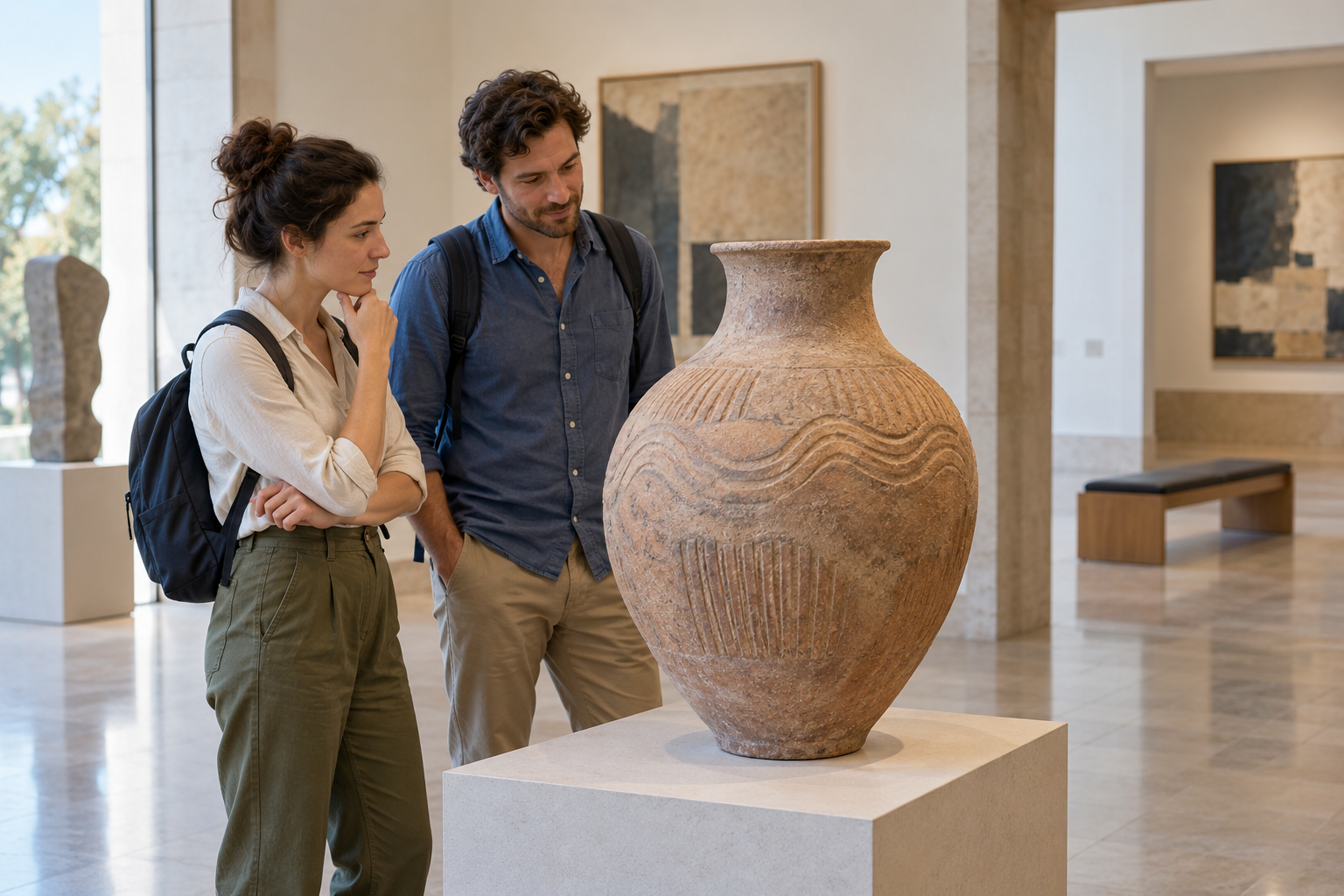
A cultural programme can follow a theme such as architecture, history, art or everyday life. Visit order and travel time make the programme coherent.
Nature travel
Describe nature travel through the setting and activities: observation, walks, relaxation or a more demanding route. Check access conditions and site requirements for that programme.
For a nature-focused day, allow time to observe the surroundings as well as to move between places. Record walking distance, terrain and rest stops so the pace is clear to participants.

Active travel and sport
Active travel requires a description of the demands, participants’ experience and conditions. An activity name alone does not explain route difficulty or equipment needs.

Travel for events
Travel for a concert, competition, exhibition or other event combines attendance with transport and accommodation. Event admission and travel tickets are separate items.
Work backwards from the event’s start and finish when arranging journeys and overnight stays. Allow time for arrival, entry and the onward journey; event admission and transport require separate confirmation.

Rural tourism
For a rural stay, clarify accommodation, activities and practical facilities. Taking part in local life and independent relaxation may belong to different programmes.
Describe what a visitor will actually do during a rural stay: observe everyday work, join an arranged activity or simply rest. Participation, accommodation and getting to the site should be explained separately.

Organisation, format and travellers
Independent travel planning
When organising a trip independently, the traveller coordinates purchases and timing within one itinerary. This can include buying a package independently; an agency can also arrange individual services. Who coordinates the trip and what is included in a product are separate choices.
A package describes which services are offered together. A method of organisation describes who coordinates and arranges them. Agency help can cover individual services or a package; the traveller still chooses and agrees the arrangements.
| Task | By yourself | Partial delegation | Agency assistance |
|---|---|---|---|
| Who coordinates the route? | The traveller coordinates all dates, stops and connections. | The traveller coordinates the overall route; the chosen provider arranges an agreed part. | The agency proposes and coordinates the agreed scope with the traveller; responsibilities are agreed explicitly. |
| Which choices remain with the traveller? | Destination, dates, route, services and conditions. | Destination, dates, overall route and approval of the delegated services. | Destination, dates, preferences and approval of the proposed services and conditions. |
| What must be confirmed? | Each booking: provider, dates, travellers, inclusions and change or cancellation conditions. | The delegated scope, its confirmations and connections with the services arranged independently. | The agreed scope, each included service, confirmations and who handles later changes. |
Who organises which part?
By yourself
- Who coordinates the route?
- The traveller coordinates all dates, stops and connections.
- Which choices remain with the traveller?
- Destination, dates, route, services and conditions.
- What must be confirmed?
- Each booking: provider, dates, travellers, inclusions and change or cancellation conditions.
Partial delegation
- Who coordinates the route?
- The traveller coordinates the overall route; the chosen provider arranges an agreed part.
- Which choices remain with the traveller?
- Destination, dates, overall route and approval of the delegated services.
- What must be confirmed?
- The delegated scope, its confirmations and connections with the services arranged independently.
Agency assistance
- Who coordinates the route?
- The agency proposes and coordinates the agreed scope with the traveller; responsibilities are agreed explicitly.
- Which choices remain with the traveller?
- Destination, dates, preferences and approval of the proposed services and conditions.
- What must be confirmed?
- The agreed scope, each included service, confirmations and who handles later changes.
Package holidays
A package brings several travel services together in one product sold for a combined price. Its exact components depend on the offer: transport, accommodation, meals, transfers and activities can be included in different ways. Compare the stated services and extras; the word “package” alone does not confirm them.
Package components and extra costs
List which transport legs, nights, meals, transfers and activities are included. Mark the remaining components as separate decisions; the word “tour” alone does not establish what has been purchased.
Services purchased outside the package
If a ticket or excursion is bought outside the package, check how it fits the dates and meeting points. A change in one booking does not automatically change the others.
Cruises
A cruise combines time aboard with visits along the route. Compare the cabin, meals, port calls and shore programme as separate elements.
In a cruise itinerary, distinguish time aboard from visits ashore. For each stop, separate the ship’s call, transport ashore and any excursion, including which elements belong to the booked programme.

Family, solo and group travel
The travelling party affects pace, accommodation and transport. For family, solo or group travel, record individual needs and agree how shared decisions will be made.

Number, ages and needs of travellers
Record the number and ages of participants, individual needs and the preferred pace. A family trip and a children’s programme with separate supervision are different arrangements.
Agree shared decisions
For a group, clarify who approves the itinerary and how differences in rooms, activities and timing will be handled. A group does not necessarily mean a package or identical services for everyone.
Accessibility and responsible conduct
Accessible travel
Accessible travel starts with matching the journey to the traveller’s specific needs. Check boarding, connections, building entrances, room layouts and assistance across the whole itinerary.
Check the whole chain
Describe the needed conditions at boarding, transfers, building entrances, rooms and activity locations. One accessible element does not establish that the entire journey meets the same needs.
Request specific confirmation
Use concrete descriptions of equipment, assistance and dimensions where relevant. Retain the provider’s confirmation for the exact service rather than relying on a general category label.
Responsible travel
Responsible travel considers the people and places connected with an itinerary. Review resource use, waste and visitor rules for natural and cultural sites in the specific programme.
Three everyday decisions
Plan these actions as part of the route, rather than relying on an unverified environmental label.
- Respect residents’ private space
- Use public paths; do not enter courtyards, gardens or homes without an invitation.
- Agree before photographing people
- Ask before taking an identifiable photograph, accept a refusal and discuss publication separately.
- Plan what happens to waste
- Find out where waste can be disposed of along the route. Carry it with you until a suitable collection point if none is available.
Transport, accommodation and other services
Buying travel tickets
Before buying a travel ticket, compare the complete journey: origin, destination, dates, connections, baggage and fare conditions. An enquiry, reservation, payment and issued ticket are separate stages. Check the ticket against the intended trip.

Air, rail, coach and water transport tickets
An air, rail, coach or water-transport ticket concerns a specific journey. Record the exact airports, stations or terminals and every leg. An event admission ticket concerns attendance at an event and is a different purchase.
Compare the complete journey
Read the fare together with departure and arrival times, connections, baggage and selected extras. Separate included items from additional charges. Do not assume that similar ticket names have identical change or baggage conditions.
Ticket, reservation and payment receipt
After purchase, compare the issued document with the passenger details, route and dates. Keep the seller’s confirmation and the contact responsible for changes. A payment receipt alone should not be mistaken for the travel ticket.
Accommodation
Accommodation information should identify location, room, dates, guests and included services. Photographs support those details; booking and change conditions require separate checks.

Location and room
Specify the address or area, room category, guest numbers and dates. “Near the centre” and a room photograph do not replace the actual location or the booked room description.
Services and conditions
Clarify meals, facilities and the services important to the travellers. Keep check-in, check-out and change conditions with the confirmation for that booking.
Transfers and local transport
A transfer connects specific itinerary points. Coordination requires addresses or meeting points, timing, passenger numbers and luggage. Include local journeys in the overall plan.
Match each local journey to the previous and next part of the day. For a transfer, record meeting and drop-off points; for local transport, check boarding needs, luggage and the route to the final address.

Excursions and guide services
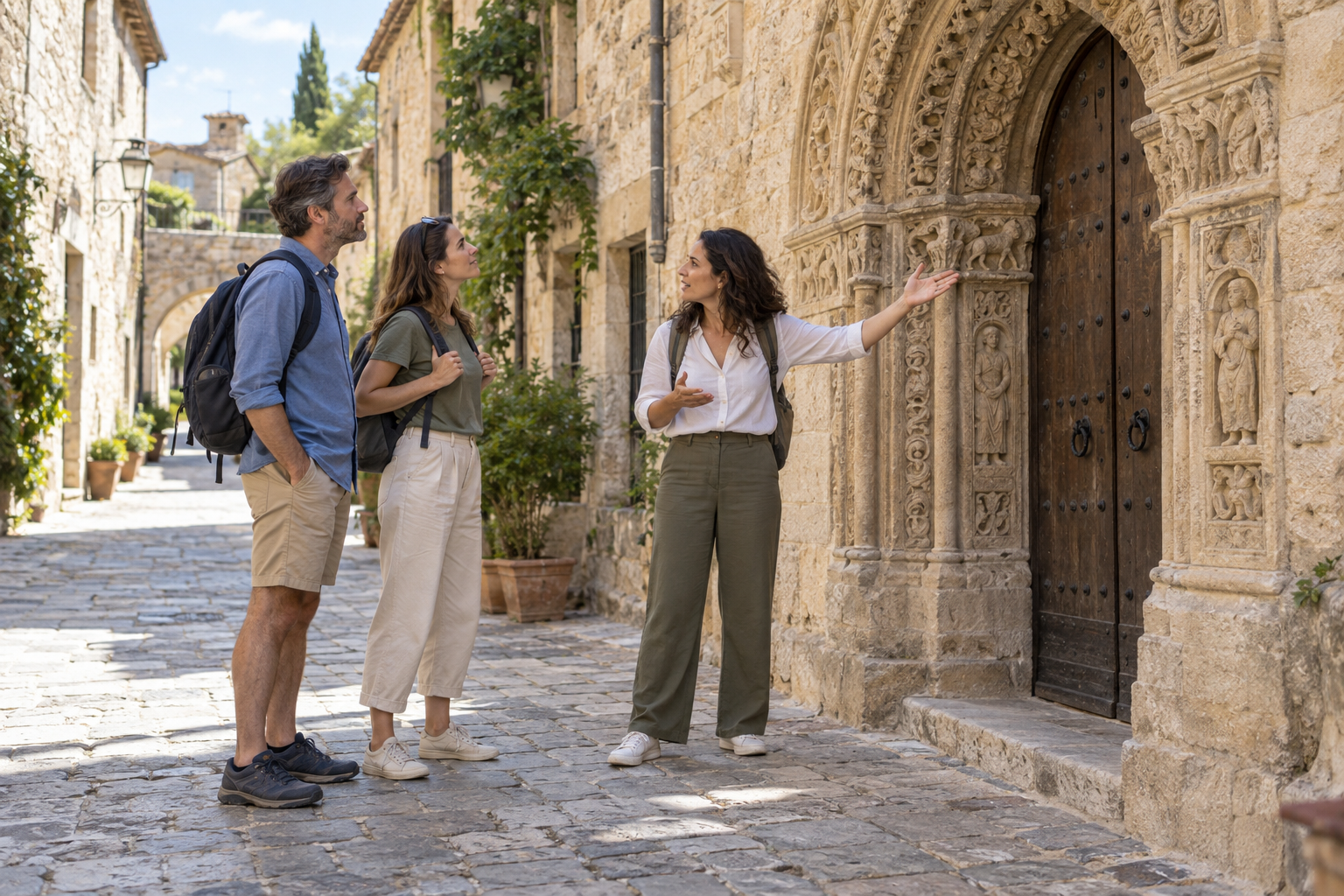
An excursion is a programme focused on a place or theme and can be part of a longer trip. Clarify content, duration, language, participation format and included services.
Programme and participation
Compare the actual stops, duration, language, meeting point and participation format. Establish whether admissions, transport and guide services are included or paid separately.
An excursion within a longer trip
A traveller staying overnight can take an excursion. The purchased activity and the statistical distinction between an overnight and a same-day visitor are different concepts.
Food and dining
Meals may be included in accommodation or activities, or arranged separately. Identify included meals, individual requirements and additional spending.
Separate meals included in the programme from those you will choose independently. Record dietary needs in the enquiry and confirm available options with the actual provider.
Travel insurance
Review insurance conditions against the itinerary, duration and planned activities. Relevant details include stated coverage, exclusions, limits and the procedure for contacting the insurer under the specific policy.
Planning and booking
Itinerary planning
An itinerary connects places with a calendar. Mark journeys, time at each stop and fixed events, then check that transport, accommodation and activities fit together.

An example to adapt to your route
2 adults, 4 days and 3 overnight stays in fictional cities A and B. The example below combines two nights in A and one in B; allow time for each transfer and departure. Three route forms help organise the same choices.
- One base with day trips
- Stay in one place and return there after each day trip. Check the time needed for the outward and return journeys.
- Linear route
- Move from one overnight stop to the next and finish at a different point. Agree how you will return home.
- Circular route
- Visit several stops and return to the starting point. The four-day example below uses this form: A → B → A. The arrows show the order of stops, not the shape of the roads; choose the travel legs and their timing separately.
How the four days connect
Arrive in A
Day 1: arrive, reach the accommodation and take a short walk.
Activities and overnight stays in A
Days 1–2: explore A and its surroundings; spend both nights in A.
Move to B
Day 3: travel from A to B, explore B and stay overnight.
Return and depart
Day 4: return from B to A and depart, leaving a buffer between services.
This is a teaching example, not a booked itinerary. Check actual timetables, journey times and accommodation availability before choosing services.
| Day | Movement | Overnight stay | Programme |
|---|---|---|---|
| Day 1 | Arrive in A; travel to the accommodation. | In A. | Check in and take a short walk. |
| Day 2 | Day trip from A and return to A. | In A. | Explore the surroundings and allow time to rest. |
| Day 3 | Travel from A to B. | In B. | Explore B after arrival. |
| Day 4 | Return from B to A and depart. | No overnight stay. | Breakfast; a short walk if time permits; departure buffer. |
Day-by-day route: 2 adults, 4 days, 3 nights
Day 1
- Movement
- Arrive in A; travel to the accommodation.
- Overnight stay
- In A.
- Programme
- Check in and take a short walk.
Day 2
- Movement
- Day trip from A and return to A.
- Overnight stay
- In A.
- Programme
- Explore the surroundings and allow time to rest.
Day 3
- Movement
- Travel from A to B.
- Overnight stay
- In B.
- Programme
- Explore B after arrival.
Day 4
- Movement
- Return from B to A and depart.
- Overnight stay
- No overnight stay.
- Programme
- Breakfast; a short walk if time permits; departure buffer.
Travel documents
Separate personal and entry documents, service confirmations, contracts and insurance documents. A general list supports preparation but does not replace route-specific checks or constitute an issued ticket, policy or permit.
Personal and entry documents
Start with the traveller’s actual circumstances and the full route, including transit. Determine the responsible authority and check the requirements for the intended dates. A general checklist cannot settle every individual case.
Service confirmations
For tickets, accommodation and transfers, match names, dates, places and service scope. Distinguish a proposed itinerary, a reservation and an issued confirmation; they serve different purposes.
Contracts and insurance documents
Keep the terms attached to the actual purchase or policy and the details of the contracting parties. A sample form or explanatory article is not the traveller’s contract, policy or authorisation.
Budgeting and comparing offers
A budget combines selected services and additional spending. Compare offers against one trip specification, currency and quotation date, separating inclusions from extras.
Equivalent scope
Use the same dates, traveller numbers, nights, room type and transport requirements when comparing offers. A lower total for a smaller service bundle does not by itself show a saving on the same trip.
Two fictional options for the same circular A → B → A route: 2 adults, 4 days and 3 overnight stays. “Included” means part of this example option; “Separate” means arranged separately; “To confirm” means the scope is not yet specified. These are not prices or commercial offers.
| Service | Option A | Option B |
|---|---|---|
| Transport | Included: arrival in A, A → B → A travel and the return journey home; check the actual tickets and times. | Separate: the same journeys are arranged separately; check each connection. |
| Accommodation | Included: 3 nights, two in A and one in B, for 2 adults; confirm the room arrangement. | Included: the same 3 nights for 2 adults; confirm the room arrangement in A and B. |
| Meals | Included: breakfast after each overnight stay. Separate: lunch and dinner. | To confirm: whether breakfast is included. Separate: lunch and dinner. |
| Transfers | Included: arrival point ↔ accommodation in A. Separate: other local journeys. | Separate: arrival point ↔ accommodation in A and other local journeys. |
| Activities | Included: the day-two trip from A. Separate: other activities; check entry tickets and duration. | To confirm: the day-two trip from A. Separate: other activities. |
Compare the same trip composition
Option A
- Transport
- Included: arrival in A, A → B → A travel and the return journey home; check the actual tickets and times.
- Accommodation
- Included: 3 nights, two in A and one in B, for 2 adults; confirm the room arrangement.
- Meals
- Included: breakfast after each overnight stay. Separate: lunch and dinner.
- Transfers
- Included: arrival point ↔ accommodation in A. Separate: other local journeys.
- Activities
- Included: the day-two trip from A. Separate: other activities; check entry tickets and duration.
Option B
- Transport
- Separate: the same journeys are arranged separately; check each connection.
- Accommodation
- Included: the same 3 nights for 2 adults; confirm the room arrangement in A and B.
- Meals
- To confirm: whether breakfast is included. Separate: lunch and dinner.
- Transfers
- Separate: arrival point ↔ accommodation in A and other local journeys.
- Activities
- To confirm: the day-two trip from A. Separate: other activities.
Included and additional costs
Separate transport, accommodation, meals, transfers and activities. Record optional extras and known mandatory charges for the actual offer, rather than silently treating missing items as included.
A dated comparison
Keep the currency, quotation date and stated validity beside the amount. The reference explains how to compare costs; current prices come from actual dated offers.
Preparing an enquiry
For a useful enquiry, state the purpose, approximate dates, itinerary, travelling party and key requirements. Review and refine the text before choosing a recipient and sending it.
Prepare my travel enquiryBooking, payment and confirmation
A submitted enquiry does not establish a booking. Record payment, confirmation and received documents separately. For each service, identify the provider and the confirmed conditions.
Enquiry and reservation
An enquiry describes a need; a reservation records a particular arrangement and its conditions. Identify the recipient, the service and any stated time limit instead of treating a sent message as an accepted booking.
Payment and confirmation
Record the amount, currency and service connected with the payment. Then check what the provider has actually confirmed. Different parts of the trip may reach these stages at different times.
A usable booking record
For each service, keep its reference, traveller details, dates, scope and contact. This makes it possible to check the trip as a whole and explain a change without relying on scattered messages.
Worked example: checking confirmations
These fictional records for 2 adults, 4 days and 3 overnight stays are incomplete.
- Travel between stops
- The sample travel confirmation lists 2 adults going from A to B on day 3 and returning to A on day 4. Check departure and arrival places and times against check-in and check-out in B.
- All overnight stays
- The accommodation confirmation covers only the nights after days 1 and 2 in A. It does not cover the night after day 3 in B. Find a separate confirmation for B or clarify that stay with the provider.
- A separate transfer
- The local transfer after arrival in B on day 3 appears only in an enquiry. Its status remains “awaiting confirmation”. Agree a meeting point and time that fit the arrival, and obtain confirmation for this separate service.
Preparation, travel and completion
Before departure
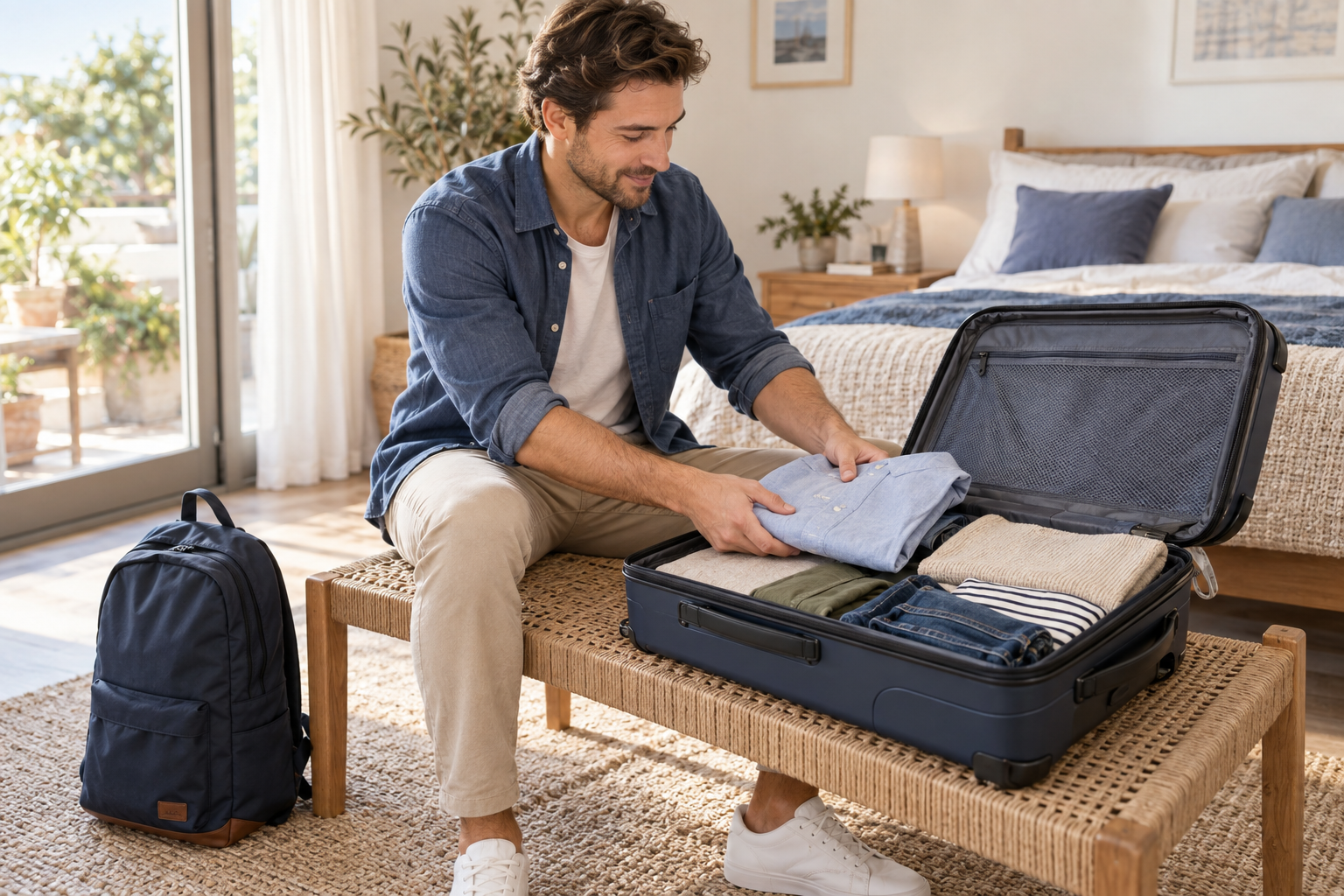
Before departure, review the itinerary in sequence: names and dates, tickets, accommodation, transfers and contacts. Keep confirmations accessible when needed.
During the trip
During the trip, the plan identifies the next service and its provider. If arrangements change, keep updated confirmations and identify which later itinerary elements are affected.
Changing or cancelling a trip
A change to one leg can affect other bookings. List the affected services and check their specific conditions. A change or refund request and its confirmed outcome are different states.
Find the affected services
List which ticket, night, transfer or activity needs to change and how this affects the following itinerary. Linked dates do not imply that all providers use the same conditions.
Use booking-specific terms
Check the conditions attached to the actual purchase and contact the responsible party. Do not assume a universal deadline, fee or refund amount from a generic article.
Keep the outcome separate
Record the request, its acknowledgement and the confirmed result separately. If revised documents are issued, compare them with the updated itinerary before treating the change as complete.
After the trip
After travel, keep final confirmations and review outstanding service issues. Feedback is clearer when tied to a specific booking, date and observed outcome.