Variable-frequency drive
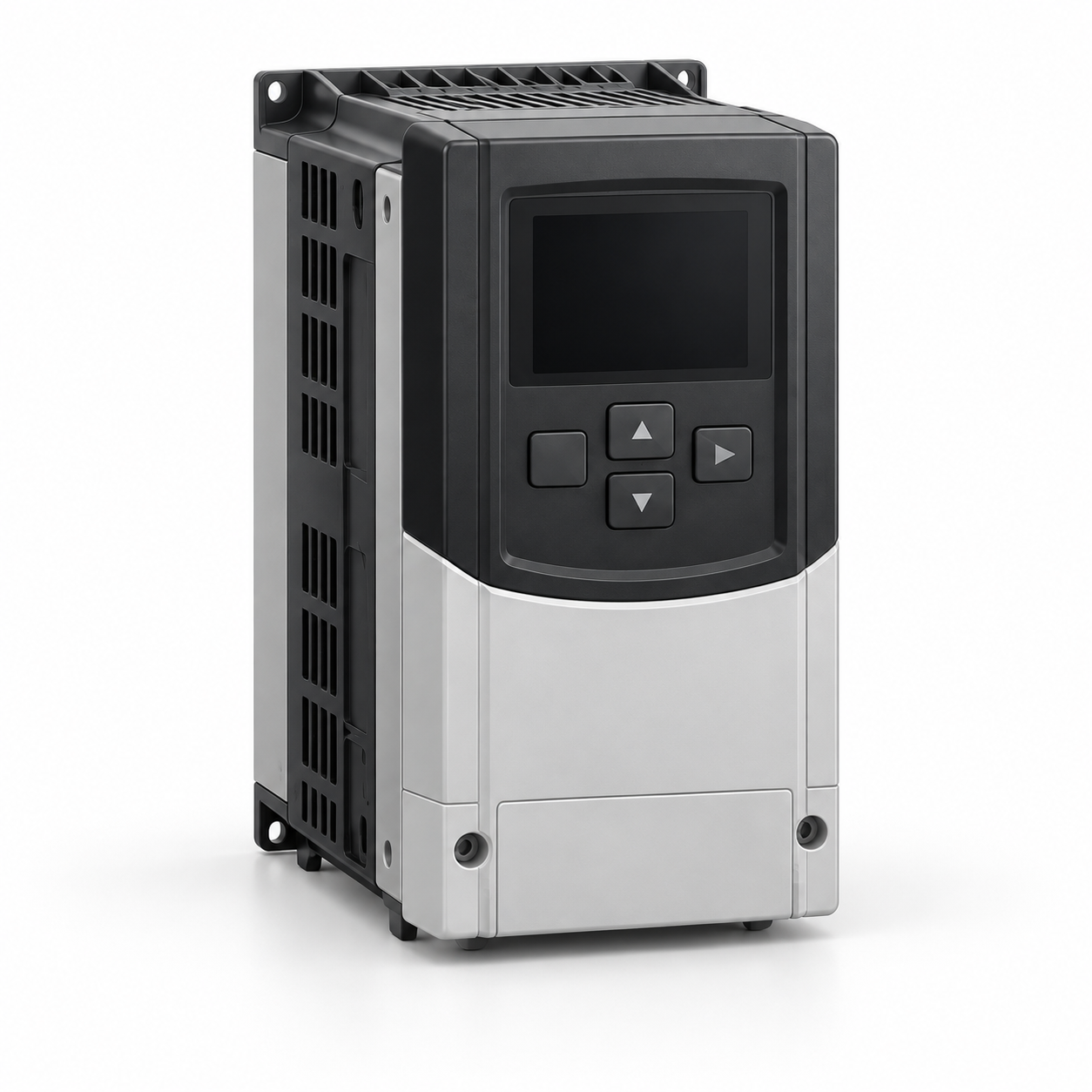
A variable-frequency drive changes the electrical supply frequency to regulate a compatible motor. A speed command alone does not confirm actual airflow.
A DX coil exchanges heat directly with refrigerant. The AHU, refrigeration equipment and controller form a matched system, whether the refrigeration components are remote or integrated.
DX means direct expansion: refrigerant evaporates in the air-cooling coil and absorbs heat. In a reversible heat-pump system, a coil can also heat air when refrigerant condenses in it. A water coil instead receives cooled or heated liquid from a separate plant.
A DX AHU must be matched to its refrigeration equipment and controls. Check refrigerant, airflow range, coil circuits, capacity modulation, outdoor limits, defrost interaction and permitted pipe lengths/elevations. Nominal cooling capacity alone does not establish compatibility.
Confirm coil capacity at entering-air temperature and moisture, refrigerant conditions and the minimum/maximum airflow. Match the outdoor or integrated refrigeration section, expansion control and capacity steps. Verify oil return, pipe limits and any low-ambient or heating/defrost requirements through the selected system documentation. Avoid choosing a larger nominal outdoor unit as an assumed fix for an unmatched coil.
Related components: Direct-expansion coil
Calculate the sensible air-side duty only. Refrigerant matching, condensation, latent duty and DX coil selection are not calculated.
Calculate sensible air loadCalculate the heat rate associated with a specified temperature change in one air stream. Enter all five values for your stated operating conditions.
Mass flow ṁ = ρ × V̇ / 3600; temperature change ΔT = Tout − Tin; sensible heat rate Q̇ = ṁ × cp × ΔT. With the units below, the result is in kW. Positive Q̇ means heating; negative Q̇ means cooling. Zero flow or zero temperature difference gives zero sensible load.
For a steady, single-phase air stream with constant user-supplied properties. The balance excludes latent heat, moisture changes, phase change, shaft work and kinetic/potential energy changes. It does not select a fan, coil or complete AHU.
Interactive calculation requires JavaScript. The formula, units, scope and reference information remain available here for manual use.
This browser cannot retain the local inputs. They remain available until this page is left.
For a steady, single-phase air stream with constant user-supplied properties. The balance excludes latent heat, moisture changes, phase change, shaft work and kinetic/potential energy changes. It does not select a fan, coil or complete AHU.
The draft contains the topic, entered parameters, method, result, assumptions and unanswered questions. It remains in this page and is not sent.
Choose a topic explicitly to prepare a local draft.
In a modular DX AHU, the air-side arrangement and refrigeration duty are selected together. Reserve withdrawal and pipe-disconnection access for the coil, preserve an even air approach and document permitted capacity control. Confirm the exact coil/system pairing rather than matching only rated kilowatts.
Related components: Direct-expansion coil
When DX equipment serves a hygienic application, condensate management and accessible cleaning become part of the selection. Check control behaviour at minimum capacity and during heating defrost where applicable. Evidence for thermal capacity must be accompanied by the project’s separate hygiene checks.
Commission the complete air and refrigeration sides together. Verify actual fan operation and, where required, airflow proof; also test minimum-airflow protection, capacity response and drainage. Preserve the refrigerant circuit and controller configuration with the unit record. A later outdoor-unit replacement requires renewed compatibility confirmation.
Related components: Fan · Condensate drainage · Controller
A variable-frequency drive changes the electrical supply frequency to regulate a compatible motor. A speed command alone does not confirm actual airflow.
A guide to equipment and selection; the final configuration and performance require project-specific confirmation.