A glycol coil enquiry needs the actual fluid mixture, beyond the word antifreeze. Define the fluid and each operating duty so that the coil can be matched to the intended circuit.
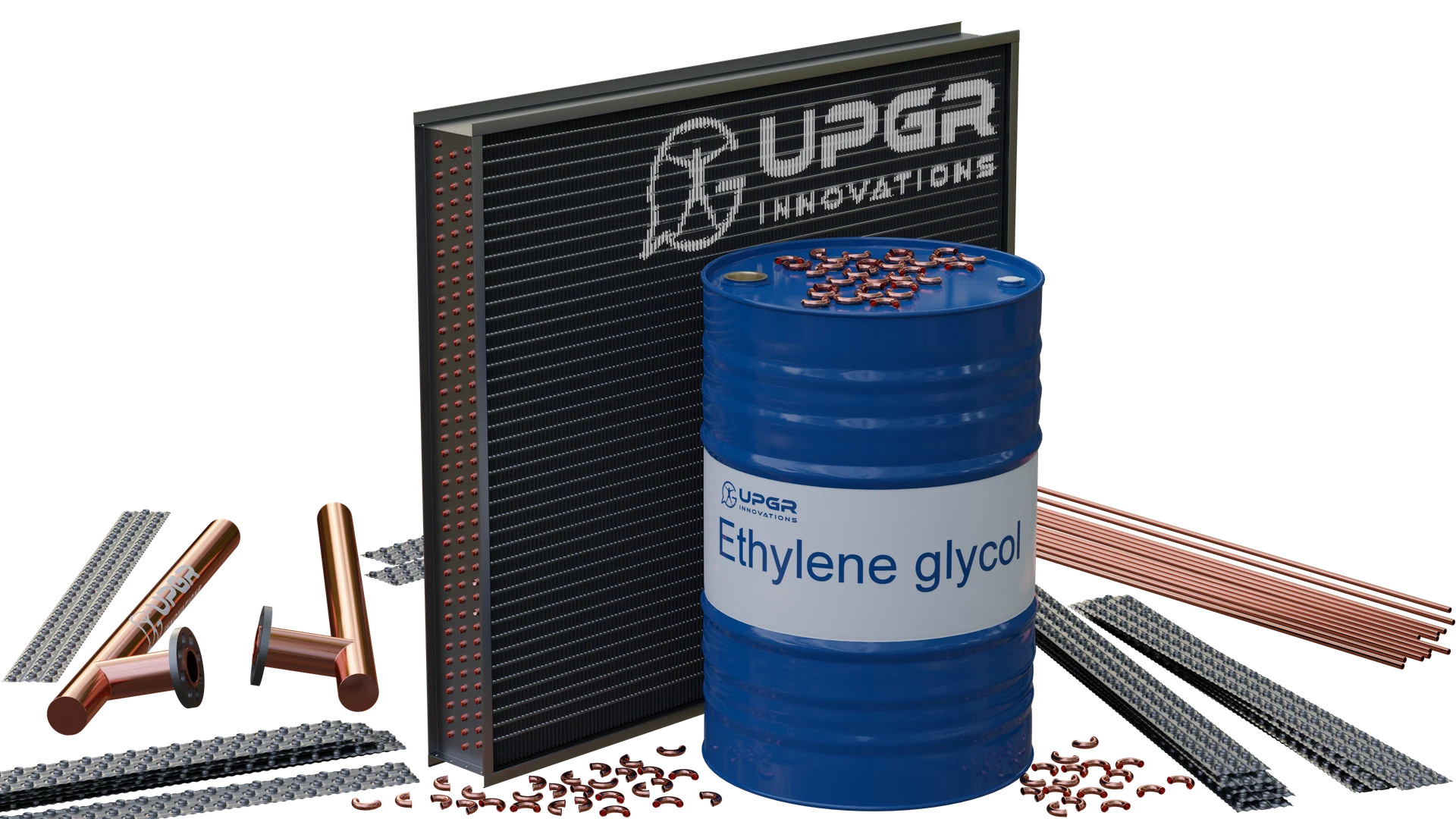
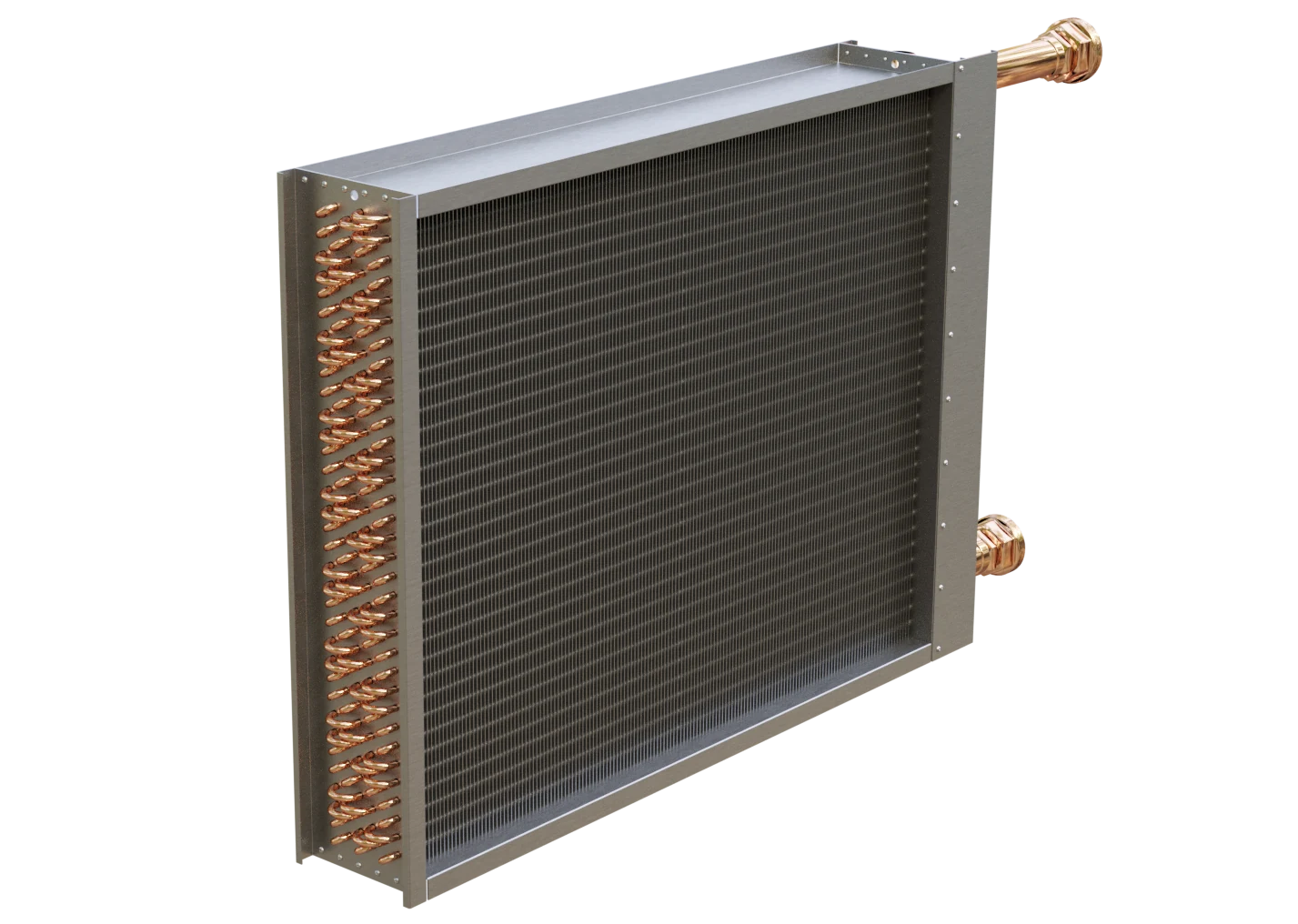
Glycol archive compositionUPGR archive composition with separated coil parts and an ethylene-glycol barrel. It illustrates the subject, not a repair procedure, fluid concentration or verified material compatibility.Liquid coil — finned faceUPGR archive 3D visualization of a liquid coil. The view shows the finned surface and return bends; dimensions, fluid and internal circuits are specified for the project.
01
Ethylene glycol, propylene glycol and formulated fluids
State the fluid base and product name. For a formulated mixture, include its product data; for diluted concentrate, record the final concentration and whether it is specified by mass or volume. Distinguish a composition recorded in an old enquiry from information about the current fill.
IN PRACTICE
Fluid choice and coil construction
The disassembly composition introduces the glycol topic; the separate liquid-coil view clarifies the assembled form.
01
State the mixture
Name the glycol type and concentration in the enquiry. The barrel label alone cannot define them.
02
State the duty
Provide fluid and air temperatures and flow rates for selection.
03
Check the interfaces
Match the frame, connections and materials to the actual installation.
These are separate archive examples, not stages of one approved product or a repair instruction.
02
Heating, cooling and shutdown conditions
Glycol solutions are used in coils serving different thermal duties. Separate normal operating temperatures, start-up conditions and possible fluid cooling during shutdown. Freeze-protection requirements must be agreed for the particular product and system; naming the fluid is not a protection guarantee.
03
Changing from water or changing concentration
Provide the previous selection alongside the new mixture specification. Request a review of duty, flow and pressure drop under the new conditions, including the existing piping arrangement. Do not transfer a water rating to glycol or infer concentration from a drum shown in a catalogue image.
04
Replacement and fluid history
For an operating circuit, record the latest fill, top-up or product change where known. Include available fluid-check results and a description of the problem. If the history is unknown, keep it as an open question rather than basing a replacement on an unverified old mixture.
REVIEW THE RESULT
Checks for the glycol specification
Product and concentration
Identify the product, working concentration and percentage basis; distinguish concentrate data from the final mixture.
Current fill identified
Distinguish the current fluid from an archived enquiry; record top-ups and product changes or mark them as unknown.
Changed conditions reviewed
When composition changes, obtain a selection for the new fluid rather than treating the old water rating as confirmation.
SELECTION INPUTS
Inputs to prepare
Fluid base and exact product name.
Final concentration and its basis: mass or volume.
Product data and available information about the current fill.
Operating temperatures, start-up and shutdown conditions.
Flow rates, thermal duty and pressure-drop constraints.
For replacement: previous selection, dimensions and connections.
What do you need to do?
Select a new coil
Define operating conditions first. The input checklist above describes the data needed for this application. The enquiry form adapts to the selected duty; it does not calculate a coil rating.
Add the equipment nameplate, photographs, overall and finned dimensions, airflow direction, connections and access constraints. Matching the envelope alone does not confirm performance or compatibility.
Separate fixed interfaces from dimensions open to change. Attach the current drawing revision, duty points, material requirements, quantity and acceptance criteria. Manufacturing feasibility is confirmed for the specific specification.
Final performance, materials and compatibility require a project-specific selection and an approved drawing.
Questions about this application
Is stating glycol 30% enough?
No. Identify the product and concentration basis, and confirm that the figure describes the working mixture. Distinguish a concentrate specification from a record of the final solution.
Are glycol coils only used for cooling?
No. Fluid and thermal duty are separate attributes. Specify heating, cooling or multiple operating duties, with the conditions for each.
Can the fluid be identified by its colour?
Use the product name and data sheet for selection. If only a colour or a photograph with unreadable labelling is available, treat the composition as unconfirmed.